My neighbour’s son came to my door last month with a question I have heard a dozen times now. He had just finished his second year of college, his family could not afford a private computer academy, and he wanted to know where to find free computer courses in Pakistan for students that were actually free — not “free” until the second week, when someone asks for a fee.
He had already tried the usual route. He had watched YouTube videos for two weeks, learned a little HTML, and then stopped, because nobody was telling him what to learn next or whether he was doing it right. He had also nearly paid Rs 5,000 to a Facebook page that promised him a “DigiSkills seat” — a seat in a programme that costs nothing. That is the part that worries me most. The free courses are real. The people charging for them are not.
So here is the honest guide I wish someone had handed him. Four government programmes that teach computer skills for free or nearly free in Pakistan: NAVTTC’s Prime Minister’s Youth Skills Development Programme, DigiSkills, PITB’s e-Rozgaar, and the Punjab pair of TEVTA and PSDF. I checked each one against its official website on 6 November 2026 before writing this, and where the official site did not say something clearly, I will tell you that too.
One thing to know before we start: these programmes are not the same thing. Some are in-person classes at a training centre near you. Some are fully online. Some are for matric students, some need a university degree. Picking the wrong one is the most common reason people quit. So read the comparison first, then pick one — just one — and apply.
Free computer courses in Pakistan for students — the four programmes at a glance
| Programme | Where you study | Who it is for | Computer courses | Certificate | Cost |
|---|---|---|---|---|---|
| NAVTTC / PM Youth Skill Development Programme | In person, at 866 partner institutes across Pakistan | Pakistani youth, age varies by trade (typically 18–40 — check the NSIS portal), matric or above | AI, web development, graphic design, digital marketing & SEO, freelancing, data analytics, Python | NVQF certificate, verifiable online | 100% free (NAVTTC’s own FAQ) |
| DigiSkills 3.0 | Fully online, from home | Anyone who can read, write and understand English — no degree needed | 24 courses incl. WordPress, graphic design, SEO, AI with Python, data analytics, full stack development | Free e-certificate from Virtual University | 100% free |
| PITB e-Rozgaar 2.0 | In person at partner colleges/institutes in Punjab | Punjab residents, Matric/O-Levels or above (current portal criteria) | Technical (web development, WordPress), Creative Design, Content Marketing, E-Commerce | Online certificate via CNIC on the portal | Original programme was free; under 2.0 PITB calls it “affordable” — confirm the fee with your centre |
| TEVTA / PSDF (Punjab) | In person at TEVTA institutes and PSDF partner centres across Punjab | Punjab youth, age and education vary by programme (PSDF Advance Tech: 16–40 in its 2025-26 document; the current programme page states 18–40 — confirm on the portal) | AI & machine learning, cloud computing, data analytics, digital marketing, MEAN/MERN, mobile app development | PSDF/TEVTA certificates; some with international certification | Free under the government-funded schemes — check the fee for the specific course |
NAVTTC — the big in-person option
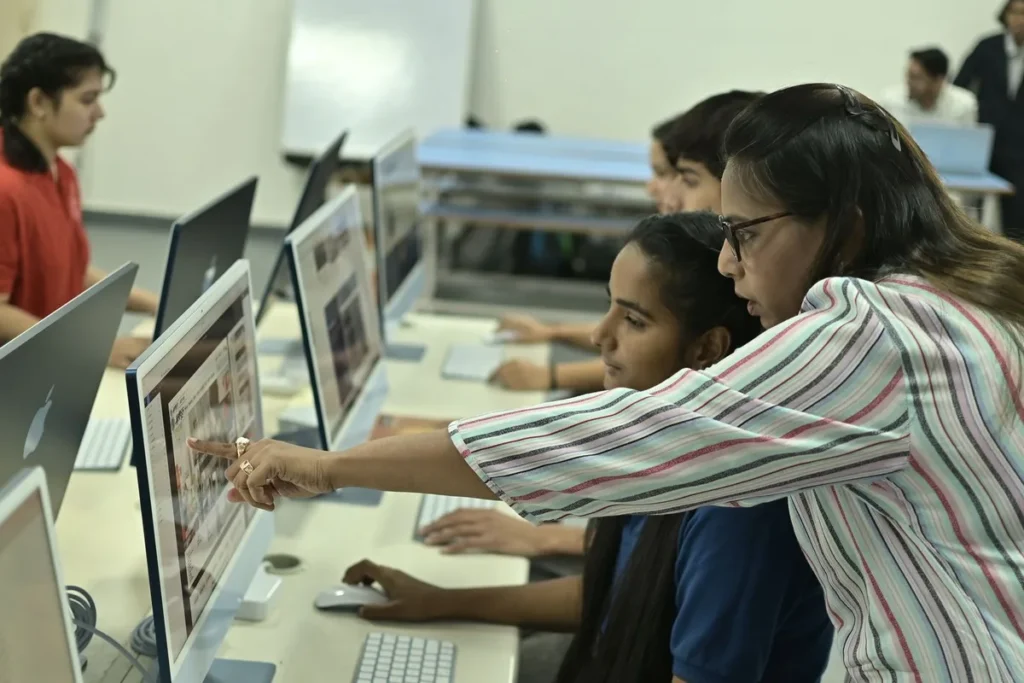
NAVTTC is the National Vocational and Technical Training Commission, the federal body that runs the Prime Minister’s Youth Skills Development Programme (PMYSDP), also known as Hunarmand Pakistan. If you learn better with a teacher in the room and a real computer in front of you, this is probably your best option.
The scale of it is worth understanding. NAVTTC’s own homepage says its latest PMYSDP batch trained more than 75,000 trainees across 866 institutes, learning 103 demand-driven trades. The commission lists more than 450 certified trades across 15 sectors in total, and says it has trained over 850,000 professionals. The computer-related trades are the ones that matter for this article: artificial intelligence, web development, graphic design, digital marketing and SEO, freelancing and e-commerce, Python programming and data analytics. Courses generally run for 3 to 6 months depending on the trade, and when you finish and pass the final assessment, you get a certificate under the National Vocational Qualifications Framework (NVQF), which employers can verify online.
NAVTTC’s own FAQ is blunt about the price: all training programmes under PMYSDP and Hunarmand Pakistan are 100 percent free of cost. That is the official line, and it is the reason this programme tops the list.
Who can apply
The general pattern for NAVTTC training is Pakistani citizens, generally aged 18 to 45, with at least a matric for most trades. Digital courses may ask for intermediate or university-level education, and some youth-focused batches set a narrower age range. The exact requirement changes by trade and by batch, so check the requirement for your chosen trade on the NSIS portal rather than trusting a general rule.
How to apply for NAVTTC free courses
- Go to the official NSIS portal — the National Skills Information System — at nsis.navttc.gov.pk. This is the only official application route. Do not apply through a Facebook page or an agent.
- Register as a Candidate with your CNIC, mobile number and email address.
- Verify your account through the OTP sent to your phone.
- Choose an open programme, pick your trade and a nearby institute, and submit your application.
- Wait for the merit list, which NAVTTC usually publishes online and shares by SMS, then attend the entry test if your trade asks for one.
The honest status check
Here is where I have to be straight with you. NAVTTC runs its training in batches, and batches open and close through the year. The Skills of Tomorrow 2026 intake — the digital-skills round with courses like AI for Everyone, AI-Powered eCommerce and Graphic Design — closed on 15 July 2026, and I could not verify a new intake date on the official site on 6 November 2026. The PMYSDP Batch III assessment plans were published in May 2026. So do not trust a random Facebook post that says admissions are open today. Open the NSIS portal and check what is actually open right now. If nothing is open, register your account anyway so you are ready the day the next batch appears.
One more honest point: NAVTTC’s official pages say the training is free, but they do not mention a stipend for PMYSDP or Skills of Tomorrow trainees. Some blogs quote stipend figures of Rs 3,000 to 5,000 a month. I could not verify any stipend amount on NAVTTC’s own pages, so I am not going to quote one here. If a stipend matters to your decision, ask the institute when you apply — and do not plan your budget around a blog figure.
If you want the full picture of what NAVTTC offers beyond computer courses, our guide to free online courses with certificate in Pakistan covers it alongside the other national programmes.
DigiSkills — the free online option anyone can join
If there is no training centre near you, or you can only study at night after college or work, DigiSkills is the programme for you. It is a Government of Pakistan programme run through the Ministry of IT and Telecom and Ignite, and executed by the Virtual University of Pakistan. It is fully online, and it is the easiest of these four to join.
I have written a full guide to it here: DigiSkills Courses 2026 — Free Registration, Batch 5, Courses List & Certificate. The short version: Batch 5 enrolment opened on 2 November 2026, seats are given on a first-come, first-served basis, and classes start in the first week of December 2026. There is no minimum education requirement — the official FAQ says anyone who can read, write and understand English is encouraged to join. You can take up to 2 courses per batch, from a list of 24 that includes WordPress, Graphic Design, SEO, AI with Python, Data Analytics, Full Stack Development using MERN, Video Editing and Freelancing. When you finish a course you get a free e-certificate from the Virtual University.
How to apply for DigiSkills
- Go only to digiskills.pk. Ignore lookalike sites and anyone charging a fee.
- Create an account with a valid email address and complete your profile.
- Activate your account from the email DigiSkills sends you.
- Log in to the LMS at lms.digiskills.pk and enrol in up to 2 courses for the batch.
- Study the weekly videos, do the quizzes and the hands-on exercises, and download your e-certificate from “My Results” when you finish.
How DigiSkills is different from NAVTTC
This matters, because people mix them up. DigiSkills is online, self-paced within the week, and you study from home. NAVTTC is in-person, at a fixed institute, with a teacher and a class. DigiSkills has no entry test and no merit list — seats are first come, first served. NAVTTC has a merit list and sometimes an entry test. DigiSkills is best if you want a freelancing skill you can sell online within a few months. NAVTTC is best if you want hands-on, classroom training and a nationally recognised NVQF certificate. Neither one is better in general. They are better for different people.
PITB e-Rozgaar — Punjab’s in-person freelancing training
e-Rozgaar is a Punjab government initiative run by the Punjab Information Technology Board (PITB) with the Youth Affairs and Sports Department. It started in March 2017, and its whole idea is simple: teach graduates digital skills and freelancing, in person, at training centres across Punjab, so they can earn online.
The original programme was three months of free training at centres in universities across Punjab’s 36 districts. The courses were grouped into three or four domains — Technical (web development, WordPress, HTML and CSS, PHP and MySQL), Creative Design (logo design, Adobe Photoshop, Illustrator, InDesign), Content Marketing and Advertising (content marketing, SEO, lead generation), and E-Commerce (Shopify store setup and management) — with a Freelancing course taught alongside every domain. There was an online entry test after signup, and the original eligibility was 16 years of education, Punjab domicile, maximum age 35, and unemployed status.
What changed with e-Rozgaar 2.0
In October 2024, PITB launched e-Rozgaar 2.0. Instead of running its own centres inside universities, the programme now works through agreements with public and private colleges and training institutes, which host e-Rozgaar centres and deliver the courses in person. PITB has announced a steady run of these partnerships since then, in Faisalabad, Lahore, Sargodha, Okara, Sahiwal, Gujranwala, Sheikhupura, Sialkot, Kasur, Khanewal, Gujrat and, in January 2026, Jhang.
Two things changed that you need to know about. First, the eligibility on the official portal today is simpler than the old rules: a valid CNIC, Form B or domicile, and Matriculation or O-Levels or above. The old 16-years-of-education rule no longer appears on the portal’s eligibility list, which is good news if you are a matric or intermediate student. Second — and this is the honest part — under e-Rozgaar 2.0, PITB describes the courses as affordable rather than free, and partner centres can charge a course fee that varies by course and centre. I could not find a single official fee schedule on the portal. So before you enrol, ask the centre for the exact fee in writing, and pay only through the official method.
How to apply for e-Rozgaar
- Go to the official portal at erozgaar.pitb.gov.pk and create an account with your CNIC and a working email address.
- Fill in the application form and select your training mode — physical or online — and your preferred centre.
- Give the online entry test promptly after signing up — under the original programme’s rules it had to be within 72 hours, or the application could be considered void, so check the current portal for the current test window and do not leave it to the last day.
- If shortlisted, attend the training at your centre. The freelancing module runs alongside whichever domain you pick.
If you do get in, the freelancing module is the part to take most seriously. A web development skill without clients is a hobby. The freelancing lessons — how to make a profile, write a proposal, price your work — are what turn the skill into income. Our guide to how to start freelancing in Pakistan covers the same ground in detail, and it is worth reading alongside the course.
TEVTA and PSDF — Punjab’s two training machines
If you live in Punjab, two more names will keep coming up: TEVTA and PSDF. They are related but they are not the same thing, and understanding the difference saves you a wasted trip.
TEVTA is the Technical Education and Vocational Training Authority of Punjab. It runs government technical institutes across the province — the actual buildings with classrooms, labs and workshops. It offers short courses of up to 6 months, vocational courses of 12 to 24 months, and the 3-year Diploma of Associate Engineering (DAE) in 32 disciplines. Not all TEVTA programmes are free, so check the fee structure for the specific course before you apply. You apply through the TEVTA online admission portal at portal.tevta.gop.pk.
PSDF is the Punjab Skills Development Fund, set up by the Government of Punjab in 2010 as the largest skills development fund in Pakistan. PSDF does not run classrooms itself. It funds training — over 80,000 youth every year, in more than 250 demand-driven trades, through 500-plus private-sector training partners at more than 5,700 locations. You find a course in your city on psdf.org.pk and apply through the partner institute.
The computer courses worth knowing about
Under the Chief Minister’s Skilled Punjab initiative, PSDF runs an Advance Tech Digital Skills Scholarship Program (2025-26). Its own programme document lists trades including Artificial Intelligence, MEAN and MERN Stack development, and Mobile App Development, with testing and certification by an accredited body — the Punjab Information Technology Board — and a 70 percent employment commitment from the partner institutes. Trainees must be aged 16 to 40, residents of Punjab, and actively seeking employment, freelancing or entrepreneurial opportunities in the digital economy. Training under that round was expected to start tentatively from 1 April 2026, subject to funds.
TEVTA, meanwhile, has run free advanced IT training under the Chief Minister Maryam Nawaz Hunarmand Program, with courses in Cloud Computing, Artificial Intelligence and Machine Learning, Data Analytics, and Digital Marketing (Meta), with international certification through partners such as Meta, Microsoft and IT Specialist. That programme is reported to be aimed at IT professionals and final-year BS Computer Science and Computer Engineering students. I could not verify its current admission status or last date on TEVTA’s own website on 6 November 2026, so treat it as a programme to check on portal.tevta.gop.pk rather than one you can assume is open today.
How to apply
- For PSDF: go to psdf.org.pk, use the “Find a Training Course in Your City” search, pick a computer or IT course near you, and apply through the listed training partner. For help, call the PSDF helpline 0800-HUNAR (48627) or email info@psdf.org.pk.
- For TEVTA: go to portal.tevta.gop.pk and fill in the online admission form for the institute and course you want. Check the fee for that course on the form before you submit.
Which programme should you actually pick?
It depends on where you live, what you have studied, and how you learn best.
If you finished matric and want a classroom and a teacher: start with NAVTTC on the NSIS portal. It takes matric students for most trades, it is free, and the NVQF certificate is recognised across Pakistan. If no NAVTTC batch is open, check PSDF for a course in your city.
If you are a student in Punjab and want in-person training with a freelancing focus: e-Rozgaar is built for exactly that — but ask the centre about the fee first, because under e-Rozgaar 2.0 it is no longer automatically free.
If you have no training centre nearby, or you can only study at night: DigiSkills. No entry test, no degree needed, and you can start from home the day a batch opens. Read our full DigiSkills guide and enrol the day a batch opens, because seats go on a first-come, first-served basis.
If you are a university student and want a short start in AI: the Virtual University’s free AI and cybersecurity Learn-A-Thon is worth a look too — read our guide to the Virtual University free AI courses for the current round.
If you are a final-year computer science student or an IT professional in Punjab: check TEVTA’s Hunarmand Program for the advanced IT courses with international certification. It is the most advanced option on this list, and also the one with the narrowest eligibility.
And one thing that applies to all of them: pick one programme and one skill. The students who finish are rarely the ones who signed up for everything. They are the ones who picked one course, showed up every week, and built one small thing they could show someone — a website, a logo, a short report, a spreadsheet that works. When you finish, add that work to your CV. Our guide on how to make a CV for freshers in Pakistan shows you how to present a fresh certificate and a small portfolio so an employer actually notices it.
Common mistakes that waste a free seat

Paying someone for a free programme. NAVTTC, DigiSkills and PSDF training are free through their official sites. Anyone asking for a registration fee, a seat fee or a certificate fee in their name is not part of the programme. Walk away.
Trusting a screenshot of a deadline. Batch dates change, intakes close early when seats fill, and old posts keep circulating on Facebook and WhatsApp. Open the official page on the day you apply and read the date there. NAVTTC’s Skills of Tomorrow intake closed on 15 July 2026, and people are still sharing posts that say it is open.
Applying to the wrong programme for your education level. e-Rozgaar used to need 16 years of education; its portal now says Matric or above. TEVTA’s advanced IT courses are aimed at final-year computer science students. NAVTTC’s digital courses may ask for intermediate or higher. Read the eligibility for your specific course, not a general blog summary.
Signing up for two unrelated courses at once. DigiSkills lets you take two courses per batch. That does not mean you should take two that have nothing to do with each other. WordPress plus SEO works together. Cloud Computing plus Creative Writing does not — you will finish neither.
Treating the certificate as the goal. A certificate proves you finished a course. It does not prove you can do the work. Clients and employers will glance at the certificate and then ask to see something you made. Build one real project while you study, even a small one.
Not checking the fee before enrolling at an e-Rozgaar 2.0 centre. The original programme was free. Under 2.0, partner centres can charge a fee. Get it in writing before you enrol, and never pay a middleman in cash.
Enrolling and disappearing. Life gets busy, I know. But if you miss the first two weeks of a course, catching up feels impossible and most people quietly quit. If you fall behind, do not try to watch everything in one night. Do the current week, then come back to the missed lessons later.
Related Articles
- DigiSkills Courses 2026 — Free Registration, Batch 5, Courses List & Certificate
- Free Online Courses with Certificate in Pakistan (2026) — 7 Best Programmes
- Virtual University Free AI Courses 2026 — Learn-A-Thon, Fees & Registration
- How to Start Freelancing in Pakistan — Complete Beginner’s Guide (2026)
- How to Make a CV for Freshers in Pakistan — Format, Template & Tips
FAQs
Are there really free computer courses in Pakistan for students?
Yes. NAVTTC’s PM Youth Skill Development Programme is 100 percent free according to NAVTTC’s own FAQ, DigiSkills is completely free including the certificate, and PSDF-funded training is free for trainees. The exception to watch is PITB e-Rozgaar under its 2.0 model, where partner centres can charge a fee — always confirm the fee with the centre before enrolling.
Which free computer course is best for a matric student?
NAVTTC is usually the best fit, because most of its trades accept matric as the minimum education, and the training is in person with a teacher. DigiSkills is the best online option — it has no minimum education requirement at all. e-Rozgaar’s portal now also lists Matriculation or O-Levels as the minimum, so that is a third option if you live in Punjab.
Can I do a free computer course online from home?
Yes. DigiSkills is fully online — you study from home through its LMS, with weekly videos, quizzes and exercises. NAVTTC and e-Rozgaar are mainly in-person, and PSDF offers on-site, online and hybrid options depending on the course, so check the training type when you search on psdf.org.pk.
Do these free courses give a certificate?
Yes, if you finish the course and meet the requirements. NAVTTC gives an NVQF certificate that employers can verify online. DigiSkills gives a free e-certificate from the Virtual University of Pakistan. e-Rozgaar certificates can be downloaded from its portal using your CNIC. PSDF courses come with certification, and some TEVTA advanced IT courses carry international certification.
How do I apply for NAVTTC free computer courses?
Register as a Candidate on the official NSIS portal at nsis.navttc.gov.pk with your CNIC, mobile number and email, verify your account with the OTP, choose an open programme and trade and a nearby institute, and submit your application. Then watch for the merit list, which NAVTTC publishes online and shares by SMS.
Is e-Rozgaar still free in 2026?
Not necessarily. The original e-Rozgaar programme was free. Under e-Rozgaar 2.0, launched in October 2024, PITB describes the courses as affordable and partner colleges and institutes deliver the training — and they can charge a fee that varies by course and centre. I could not find an official fee schedule on the portal, so ask your centre for the exact fee in writing before you enrol.
Do NAVTTC courses come with a stipend?
I could not verify a stipend on NAVTTC’s official pages. NAVTTC’s FAQ says the training is 100 percent free, but it does not mention a stipend for PMYSDP or Skills of Tomorrow trainees. Some blogs quote Rs 3,000 to 5,000 a month, but those figures are unverified. Do not plan your budget around them — ask the institute directly when you apply.
What is the last date to apply for these free computer courses?
There is no single last date, because each programme runs its own batches. DigiSkills Batch 5 enrolment opened on 2 November 2026 and runs first come, first served until seats fill. NAVTTC’s Skills of Tomorrow 2026 intake closed on 15 July 2026 and the next intake had not been announced when I checked on 6 November 2026. Always check the official portal on the day you apply.
A last word
My neighbour’s son did not pay the Facebook page. He registered on DigiSkills the same evening, picked Freelancing and WordPress, and he is waiting for the batch to start in December. He also registered on the NAVTTC NSIS portal, so that if a batch opens near his city, he is already in the system. Two registrations, ten minutes each, and no money spent.
That is really the whole secret of free computer courses in Pakistan for students. The courses exist, they are good, and they cost nothing but your evenings. The hard part is not finding them. The hard part is picking one, showing up every week, and finishing something you can show a client or an employer.
So pick one tonight. Not three. One. Register on the official site, write down your study time for the week, and start the first lesson the day the batch opens. And if you get stuck, start again the next day. Most of us who finished did not finish in one clean run. We stopped, came back, and finished late. Late still counts.
Official links:
- NAVTTC: https://navttc.gov.pk
- NAVTTC NSIS application portal: https://nsis.navttc.gov.pk
- DigiSkills: https://digiskills.pk
- DigiSkills LMS: https://lms.digiskills.pk
- PITB e-Rozgaar: https://erozgaar.pitb.gov.pk
- e-Rozgaar apply page: https://www.erozgaar.pitb.gov.pk/apply
- TEVTA Punjab: https://tevta.gop.pk
- TEVTA online admission portal: https://portal.tevta.gop.pk
- PSDF: https://psdf.org.pk
Verification note
Checked against official programme websites on 6 November 2026 (navttc.gov.pk, erozgaar.pitb.gov.pk, psdf.org.pk, tevta.gop.pk, digiskills.pk) plus the DigiSkills facts verified on 5 November 2026 in the companion DigiSkills article.
Verified from official sources:
- NAVTTC homepage (navttc.gov.pk, checked 6 Nov 2026): PMYSDP latest batch 75,000+ trainees across 866 institutes, 103 demand-driven trades; 850,000+ trained professionals, 250+ trades, 650+ accredited institutes; NVQF framework with eight levels; NSIS portal at nsis.navttc.gov.pk is the application route; helpline 0800-88866.
- NAVTTC FAQ (as cited in the companion free-online-courses article, checked 5 Nov 2026): all NAVTTC training programmes under PMYSDP and Hunarmand Pakistan are 100% free of cost; more than 450 certified trades in 15 sectors; certificate under NVQF, verifiable online; courses run 3 to 12 months depending on trade, most basic courses 3 to 6 months.
- DigiSkills (digiskills.pk FAQ, checked 5 Nov 2026): Batch 5 enrolment opened 2 Nov 2026, first come first served; classes start first week of December 2026; 24 courses; maximum 2 courses per batch; no minimum educational qualification; free e-certificate from Virtual University of Pakistan, soft copy only; LMS at lms.digiskills.pk; helpline 0304-111-1570.
- e-Rozgaar portal (erozgaar.pitb.gov.pk, checked 6 Nov 2026): e-Rozgaar 2.0; eligibility criteria now listed as valid CNIC / Form B / domicile and Matriculation/O-Levels or above; certificates retrievable online by CNIC; contact erozgaar@pitb.gov.pk, 042-99000000 (ext. 1908, 1516). Programme launched 28 March 2017 by PITB with the Youth Affairs and Sports Department.
- PSDF homepage (psdf.org.pk, checked 6 Nov 2026): set up in 2010 as Pakistan’s largest skills development fund; funds training for over 80,000 youth every year in 250+ trades through 500+ private-sector training partners; 700,000 total graduates, 44% women; helpline 0800-HUNAR (48627), info@psdf.org.pk; course search by city with on-site, online and hybrid options. PSDF Advance Tech Digital Skills Scholarship Program (2025-26) document on psdf.org.pk: trades include Artificial Intelligence, MEAN & MERN Stack, Mobile App Development; age 16–40; Punjab resident; testing and certification by an accredited body (PITB); 70% employment commitment; training expected to start tentatively from 1 April 2026, subject to availability of funds. Note: the current PSDF Advance Tech programme page states the age range as 18–40, so the article gives both figures and tells readers to confirm on the portal.
- TEVTA homepage (tevta.gop.pk, checked 6 Nov 2026): TEVTA Punjab service centres and portal.tevta.gop.pk confirmed as the TEVTA portal domain.
Uncertain / unverified — do not treat as confirmed:
- No stipend amount for NAVTTC PMYSDP or Skills of Tomorrow could be verified on NAVTTC’s official pages; blog figures of Rs 3,000–5,000/month are NOT used as facts in this article.
- No current NAVTTC intake or last date could be verified on 6 November 2026. Skills of Tomorrow 2026 applications closed 15 July 2026; PMYSDP Batch III assessment plans were published in May 2026. The next intake date is unknown — the article tells readers to check the NSIS portal.
- e-Rozgaar 2.0 fees: PITB describes the courses as affordable and partner centres can charge a fee, but no official fee schedule was found on the portal. The article does not state a fee and tells readers to ask the centre in writing. The old e-Rozgaar rules (16 years of education, age max 35, unemployed, online test within 72 hours, 3-month duration) come from the programme’s own earlier pages and secondary reporting; the current portal only lists CNIC/domicile and Matric/O-Levels, so the older rules are described as the original model, not the current one.
- TEVTA CM Maryam Nawaz Hunarmand Program details (free advanced IT training, Cloud/AI/Data Analytics/Digital Marketing Meta, international certification via Meta/Microsoft/IT Specialist, aimed at IT professionals and final-year BS CS/CE students) come from secondary reporting (pakadmissions.com), not from TEVTA’s own site, which I could not verify in full on 6 November 2026. Its current admission status and last date are unverified.
- TEVTA short-course durations (up to 6 months), vocational courses (12–24 months) and the 3-year DAE in 32 disciplines come from secondary reporting, not from the TEVTA homepage text I could read on 6 November 2026.
- PSDF’s “over 100,000 youth every year” figure appears in PSDF’s own footer text while the main homepage text says “over 80,000” — the article uses 80,000+ from the main text. The 5,700+ locations figure is from the PSDF homepage.
- The DigiSkills Batch 5 status should be re-checked on digiskills.pk on the day of reading, because seats are first come, first served and may already be filled.