Free Online Courses with Certificate in Pakistan (2026) — 7 Best Programmes
I still remember the first time I typed “free online courses with certificate in pakistan” into Google. It was late at night, my laptop was old and slow, and I had just finished my degree with a CV that looked empty. Every job post seemed to ask for skills I did not have, and every academy near my home wanted a fee I could not pay that month.
So I did what a lot of us do. I signed up for three courses in one week, watched two videos from each, and finished none of them.
That is the honest part nobody puts in the shiny ads. Free does not mean easy, and a certificate does not mean a job. But free courses did change things for me, slowly, once I stopped collecting them and started finishing one at a time. A short DigiSkills course taught me enough WordPress to fix a small shop owner’s website. That one small job led to another. The certificate helped me get noticed. The work I could show helped me get paid.
This list is the one I wish someone had handed me back then. Seven programmes that are actually free for learners in Pakistan, with a certificate at the end if you finish the work. No paid academy pretending to be free. No link that asks for your card details first.
How to use this list without wasting a month
Before the seven programmes, a quick word on picking one. Most people fail at free courses for the same three reasons, and I have done all three.
First, they pick a course because it sounds impressive, not because they will use it. Artificial intelligence sounds great. But if you need income in the next few months, a practical skill like WordPress, graphic design, digital marketing or data entry will help you sooner.
Second, they sign up for too many at once. Two courses in one batch is the limit on DigiSkills for a reason. One course, finished properly, beats five half-finished ones every time.
Third, they treat the certificate as the goal. Employers and clients in Pakistan will glance at your certificate and then ask, “Show me something you made.” So while you learn, build one small thing. A sample website. A logo. A short report. A spreadsheet that actually works. Keep it in a folder you can show anyone.
A good rule I use now: pick the course that matches a job or freelance gig you can picture yourself doing in three months. If you cannot picture it, pick something else. That is the test I use for any free online courses with certificate in Pakistan list, including this one — if a programme does not lead to real work you can picture, it is not worth your evenings.
Here is a quick look at all seven, then the detail on each one.
| Programme | Best for | Certificate | Catch to know |
|---|---|---|---|
| DigiSkills 3.0 | Freelancing skills | Free e-certificate from Virtual University | Batch enrolment only, seats fill fast |
| HEC DLSEI 3.0 (Coursera) | University students and faculty | Free Coursera certificates through HEC licence | Limited licences, first come first served |
| Virtual University Learn-A-Thon | AI and cybersecurity beginners | Cisco digital badges and certificates | Eight-week programme, check the current round |
| Google Career Certificates | Job-ready tech skills | Google certificate on Coursera | Free only through a scholarship, not by default |
| NAVTTC / Hunarmand Pakistan | Hands-on vocational and digital trades | NVQF certificate | Mostly in-person training at institutes |
| Coursera Financial Aid | Anyone outside university | Certificate for that one course | Apply per course, wait up to 16 days |
| Cisco Networking Academy | Networking and IT basics | Digital badge or completion certificate | Advanced exams like CCNA are paid |
1. DigiSkills 3.0 — the first place most Pakistanis should look
If you ask ten freelancers in Pakistan where they started, a lot of them will say DigiSkills. It is a Government of Pakistan programme, run through the Ministry of IT and Telecom and Ignite, and executed by the Virtual University of Pakistan. The training is free. There is no fee to join, and learners who complete a course get a free e-certificate issued by the Virtual University.
DigiSkills 3.0 lists 24 courses in its official FAQ, including freelancing, digital marketing, SEO, WordPress, graphic design, e-commerce management, QuickBooks, AutoCAD and creative writing. You can enrol in two courses per batch. Each course runs for about 12 weeks.
Enrolment for Batch 5 of DigiSkills 3.0 opened on 2 November 2026, on a first-come-first-served basis, with classes starting in the first week of December 2026, according to the official DigiSkills FAQ. That date matters because seats fill up. If you are reading this after that batch has closed, do not pay anyone who promises you a seat. Wait for the next batch announcement on the official site.
Who it is for
Students, fresh graduates, housewives, job holders, anyone with a matric-level education and a working internet connection who wants a skill they can sell online. You do not need a degree. You do need patience, because the pace is fixed by the batch, not by you.
How to register for DigiSkills free courses
- Go only to the official site, digiskills.pk. Ignore lookalike sites and anyone charging a fee.
- Create an account with your real name, a valid email address and your CNIC details. Use the same name you will use on Fiverr, Upwork or your CV, so your certificate matches.
- Wait for the enrolment window for the current batch and pick up to two courses. Log in early on opening day.
- Attend the weekly lessons, submit the exercises and quizzes, and finish the course to get your e-certificate.
My own mistake here was picking graphic design and SEO together in my first batch because both sounded useful. I finished neither properly. The second time I picked only WordPress, built a practice site for a cousin’s shop, and actually finished. Pick one skill you will use, and one only, if you are new to this. That is why DigiSkills sits at the top of most free online courses with certificate in Pakistan lists — it is free, it is in Urdu and English, and it is built around work you can actually sell.
2. HEC DLSEI 3.0 — free Coursera courses for university students

This one surprises a lot of students. The Higher Education Commission (HEC) runs the Digital Learning and Skills Enrichment Initiative, called DLSEI, with Coursera. Through it, students and faculty at HEC-recognised universities can get free access to thousands of Coursera courses, including professional certificates from places like Google, IBM and top universities.
The official DLSEI FAQ says 30,000 licences are distributed free of cost to students, faculty and staff of public and private degree-awarding institutes recognised by HEC, on a first-come-first-served basis. It also says there is no fee for the licence, and no extra payment for the Coursera certificate for courses included in the programme. Other HEC pages and announcements for DLSEI 3.0 mention 15,000+ courses in the programme, while some news reports mention higher figures. The exact course count changes by cohort, so treat the number as approximate and check the current cohort page.
DLSEI 3.0 Cohort 4 was open for registration around the time of writing. Licences are limited, so this is not something to leave for next month.
Who it is for
Students currently enrolled in a 16-year education programme or above at an HEC-recognised university, plus faculty and staff. You need a valid CNIC or B-Form. If you are not at university, skip to number 6 on this list instead — Coursera financial aid is the route for you.
How to register
- Go to the HEC eServices portal and sign up for an account.
- Look for DLSEI 3.0 and the current cohort, and submit your application with your university and CNIC details.
- If you get a licence, activate it on Coursera and pick one course to start with. Do not enrol in ten.
- Finish the course inside your licence period. HEC can revoke a licence for inactivity, so a little progress every week matters more than a big burst at the start.
If your university has made Coursera certifications part of your degree, ask your department which certificate they will count. That saves you from finishing a course your university does not recognise. In short, these HEC Coursera free courses are the best value on this list if you are a student — a free licence to thousands of courses, with the certificate included.
3. Virtual University free AI courses — the Learn-A-Thon 2026
Virtual University of Pakistan, working with Cisco Networking Academy, opened registration in early November 2026 for nine free online courses in artificial intelligence and cybersecurity under its Cybersecurity and Artificial Intelligence Learn-A-Thon 2026. It is an eight-week learning initiative run through the university’s Professional Development Center.
The nine courses cover cybersecurity, digital safety, generative AI, prompt engineering and practical uses of AI. Named courses in the announcement include Introduction to Modern AI, Prompt Like an Engineer, Build Your Resume with AI, Find Insights with AI, AI Power User Launchpad, Core Generative AI Skills and Optimizing Generative AI. Enrolment is free, and participants can earn Cisco digital badges and certificates after meeting the course requirements.
Who it is for
Students and working professionals who want a short, guided start in AI or cybersecurity without paying for a bootcamp. No minimum degree or prior experience was specified in the announcement, which makes it a good first step if you are curious about AI but do not know where to begin.
How to register
- Go to the Learn-A-Thon page on the official Virtual University site, vu.edu.pk, and find the registration link.
- Sign up with your email and basic details, and choose your course or courses from the nine on offer.
- Study at your own pace inside the eight-week window and complete the requirements for the Cisco badge or certificate.
One honest note: VU also runs paid short courses through the same Professional Development Center, such as a CCNA course and an AWS Cloud Foundations course with fees listed on its site. Do not confuse those with the free Learn-A-Thon courses. Check the course page itself before you pay anything. If a course page says free, it should not ask for payment.
4. Google free courses in Pakistan — Career Certificates through a scholarship
Google courses are the ones people ask me about most, and they are also the ones with the most confusion around them. So here is the plain version.
Google offers free learning through Grow with Google, which replaced the old Google Digital Garage. Short courses and learning material on that platform are free. But the full Google Career Certificates — in data analytics, cybersecurity, digital marketing and e-commerce, IT support, project management and UX design — are hosted on Coursera and normally cost money. In Pakistan, the Grow with Google page lists the subscription at $20 per month after a 7-day trial, and says certificates can take three to six months at under 10 hours a week.
The free route is a scholarship. Google says it has teamed up with TechValley to offer scholarships to Pakistani freelancers, students and women in need, so eligible learners can earn a certificate for free. Other partner organisations in Pakistan, such as the Foundation Fighting Poverty with Grow with Google and TechValley, have also run scholarship intakes in 2026. Scholarship places are limited and open through partner intakes during the year, not all year round.
Who it is for
Anyone who wants a job-ready certificate that employers recognise, and who is willing to study for a few months. You do not need a degree or prior IT experience for most of these certificates.
How to register
- Go to the Grow with Google Pakistan page and look for the Career Certificate scholarship sign-up.
- Apply through the named partner for the current intake, such as TechValley, rather than paying for Coursera directly.
- If you do not find an open scholarship intake, check the financial aid option on the individual Coursera course page — that is programme number 6 below.
- Do not start a paid Coursera trial while a financial aid or scholarship application is pending, because that can cancel your application.
My advice: apply for the scholarship first, and while you wait, start the free Grow with Google material on the same topic. That way your waiting time is not wasted, and you will know within a week whether you actually enjoy the subject.
5. NAVTTC free courses — Hunarmand Pakistan and Skills of Tomorrow
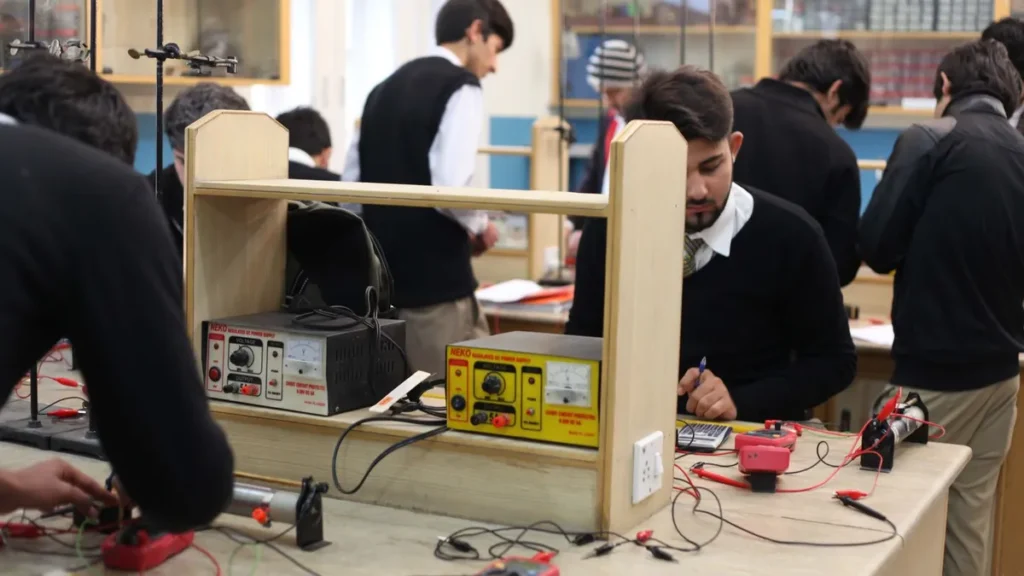
NAVTTC, the National Vocational and Technical Training Commission, runs free training under the Prime Minister’s Youth Skills Development Program, also known as Hunarmand Pakistan. Its own student page says all NAVTTC training programmes under this scheme and Hunarmand Pakistan are 100 percent free of cost.
The training covers more than 450 certified trades in 15 sectors, from electrician and welding work to newer digital courses in AI, Power BI, e-commerce, freelancing, graphic design and AI-driven digital marketing and SEO. When you finish and pass the final assessment, you get a certificate under the National Vocational Qualifications Framework, known as NVQF, which employers can verify online.
Here is the part people miss: most NAVTTC training is in person at a partner institute, not a fully online course you can do from your phone at night. That is actually its strength if you learn by doing — you get a real workshop, a real teacher and a real assessment. But it means you need to be able to attend classes in your city.
Who it is for
Pakistani citizens, generally aged 18 to 45, with at least a matric for most trades. Some youth-focused batches set a narrower age range, and digital courses may ask for intermediate or university-level education. Check the requirements for your chosen trade, because they change by batch.
How to register
- Go to the official NSIS portal, the National Skills Information System, and register as a candidate with your CNIC, mobile number and email.
- Verify your account through the OTP sent to your phone.
- Choose an open programme, your trade and a nearby institute, and submit your application.
- Wait for the merit list, which NAVTTC usually publishes online and shares by SMS, then attend the entry test if your trade asks for one.
A word of caution on dates: the Skills of Tomorrow 2026 intake closed on 15 July 2026, and the next intake had not been announced when this article was written. The PMYSDP Batch III assessment plans were published in May 2026. So do not trust a random Facebook post that says admissions are open today. Open the NSIS portal and check what is actually open right now.
6. Coursera Financial Aid — the route if you are not at university
If HEC DLSEI does not apply to you, Coursera financial aid is the next best free route, and it is the one I used for my first proper data course. It is not instant, and it is not guaranteed, but it is real.
Coursera’s own help page says you can apply for financial aid through the link on a course home page if you cannot afford the certificate. If approved, you can access all of the course content and complete the course to earn a certificate — the same certificate a paying learner gets.
There are rules worth knowing before you apply. You apply for one individual course at a time, not for a whole Specialization. Your application needs at least 150 words explaining your situation and goals. Coursera says a decision can take up to 16 days. Once approved, you have 180 days to finish that course. And if you start a free trial for a subscription while your application is being reviewed, Coursera says your application will be cancelled. I nearly made that mistake myself by clicking the big enrol button before I found the small financial aid link.
Who it is for
Anyone with an email address and a real reason they cannot pay — students, job seekers, fresh graduates, people between jobs. It works best if you pick one course that leads to a skill you can use, not a random famous course.
How to register
- Make a free Coursera account with an email you actually check.
- Open the individual course page, not the full Specialization page, and look for “Financial aid available” near the FAQs.
- Click “Learn more”, then “Continue to application”, and write an honest application of at least 150 words about your education, your financial situation and what you plan to do with the skill.
- Wait for the email decision, then start the course and set a weekly study time you can keep for 180 days.
Apply for one course, finish it, then apply for the next one in the same series. That slow way is the way that works.
7. Cisco Networking Academy — free self-paced IT courses, all year
The last programme on this list is the most flexible. Cisco Networking Academy, through its Skills for All platform, offers free self-paced courses in networking, cybersecurity, Python programming, data science and the internet of things. There is no fixed deadline and no batch to wait for. You sign up, start when you want, and study from your phone or laptop.
When you finish a course and pass its final assessment, you get a digital badge or a certificate of completion you can add to LinkedIn and your CV. Some of the entry courses ask for a pass mark of 60 percent, according to programme announcements in Pakistan. The courses themselves are free. The big industry exams, such as CCNA, are separate and paid — do not mix the two up.
Who it is for
Students heading toward IT support, networking or cybersecurity jobs, and anyone who wants to test whether they enjoy technical work before spending money on a paid certification. If you finished the VU Learn-A-Thon in programme number 3 and want to go further, this is a natural next step.
How to register
- Go to the Cisco Networking Academy or Skills for All site and create a free account.
- Pick one beginner course, such as Introduction to Cybersecurity, Introduction to Modern AI or Networking Basics.
- Work through the modules at your own pace and take the final assessment.
- Download your badge or certificate, and add one small project to your CV next to it — for example, a home network plan or a short write-up of what you learned.
Free online courses with certificate in Pakistan — which one should you actually pick?
That question comes up a lot, so here is a short answer based on what each programme is best at. If you search for free computer courses in Pakistan, you will see most of these same names again, because the honest options are few and they keep showing up for a reason.
If you want to earn as a freelancer soon, start with DigiSkills. If you are a university student, check HEC DLSEI first, because a free Coursera licence is the best value on this list. If you want a quick start in AI, the VU Learn-A-Thon is the shortest path. If you want a certificate employers already know by name, apply for a Google Career Certificate scholarship. If you learn better with your hands and a teacher in the room, look at NAVTTC. And if none of those fit, Coursera financial aid or Cisco’s self-paced courses will get you started this week, with no batch to wait for.
Whatever you pick, keep the plan small. One course. One hour a day, or even half an hour. One finished project you can show. That is how free courses with certificate online actually turn into work — not by collecting certificates, but by finishing one thing and using it.
Common mistakes to avoid
I have made most of these, so I will keep this short.
Do not pay anyone for a free programme. DigiSkills, HEC DLSEI, NAVTTC and the VU Learn-A-Thon are free through their official sites. Anyone asking for a registration fee, a seat fee or a certificate fee in their name is not part of the programme.
Do not trust a screenshot of a deadline. Batch dates change, intakes close early when seats fill, and old posts keep circulating on Facebook and WhatsApp. Open the official page on the day you apply and read the date there.
Do not enrol in a course just because the certificate looks good on LinkedIn. Ask yourself what job or gig it leads to. If you cannot name one, you will quit in week two. I know, because I have quit in week two.
Do not skip the practice work. Quizzes alone will not get you hired. One small real project beats a perfect quiz score.
And do not compare your week one with someone else’s year three. The freelancers you see online did not get there in a month. They finished one course, then another, and kept showing their work.
Related Articles
- How to Learn Spoken English Free in Pakistan — 10 Best Ways (2026)
- Online Earning in Pakistan for Students Without Investment — 7 Real Ways (2026)
FAQs
Are free online courses with certificate in Pakistan really free?
The seven programmes in this article are free to join through their official routes, and the certificate is free if you complete the course. But read the fine print each time. Google Career Certificates are free only through a scholarship, Coursera financial aid is approved per course, and advanced exams like CCNA are paid even when the learning material is free.
Which free course is best for beginners in Pakistan?
DigiSkills is the best starting point for most beginners because it is free, in Urdu and English, and built around freelancing skills. University students should check HEC DLSEI first. For a quick start in AI, the Virtual University Learn-A-Thon is a good first step.
Do employers accept these certificates?
They accept them as proof you finished a course, not as proof you can do the job. A DigiSkills, HEC Coursera, Google or Cisco certificate helps your CV get noticed. A small portfolio of real work is what gets you shortlisted, so build one project while you study.
Can I take these courses on my mobile phone?
Yes, most of them. DigiSkills, Coursera, Grow with Google and Cisco courses all work on a phone, though a laptop or desktop makes assignments and practice much easier. NAVTTC training is mostly in person, so check the institute and timings before you apply.
How long does it take to finish one free course?
It depends on the programme. VU’s Learn-A-Thon runs for eight weeks. A DigiSkills course runs for about 12 weeks. A Google Career Certificate can take three to six months at under 10 hours a week. A short Cisco or Coursera course can take a few weeks if you study regularly.
Final thoughts
I wish I could tell you there is one perfect course that fixes everything. There is not. There is just a free course, finished properly, and then the next one, and a small piece of work you can show someone.
Pick one programme from this list tonight. Not three. One. Sign up on the official site, write down your study time for the week, and finish the first module before you go to sleep. That first finished module matters more than any certificate, because it proves to you that you can actually do this. And that is the whole point of looking for free online courses with certificate in Pakistan in the first place — not the paper, but the proof to yourself that you can learn a skill and use it.
And if you get stuck, start again the next day. Most of us who finished did not finish in one clean run. We stopped, came back, and finished late. Late still counts.