Choosing a university in Pakistan comes down to ten checks: HEC recognition of the exact institution and campus, accreditation of the exact programme, a realistic merit match, the full cost of the degree, and the practical details of where you will actually study for four years. Get those five right and the name on the gate matters far less than most people think. Get any one of them wrong and you can end up with a degree that is hard to attest, a programme that does not lead to professional registration, or fees you cannot sustain.
This guide is for students finishing Intermediate (or A-levels) and their parents, and it works the same way whether the shortlist is a public university, a private university, or a degree-awarding institute. Every check below can be done from official sources in under an hour, and none of them needs an agent or a consultant.
1. Start with the degree, not the university name
The most common mistake is picking a famous name first and a degree second. A university can be excellent for one programme and ordinary for another, because quality sits in departments, not in brands.
Write down the degree first: BS Computer Science, BBA, BS Nursing, BE Civil, LLB, MBBS, or whatever it is. Then ask three questions about it: what jobs does it actually lead to in Pakistan, what entry test or merit does it need, and which professional body (if any) controls it. A student who wants software engineering and a student who wants civil engineering are buying two different things, even at the same university, because one is judged by the National Computing Education Accreditation Council (NCEAC) and the other by the Pakistan Engineering Council (PEC).
If you are still deciding between fields, that decision comes before any university comparison. A wrong field at a good university is worse than the right field at an average one.
2. Check HEC recognition of the exact institution
The Higher Education Commission (HEC) publishes the official list of recognised universities and degree-awarding institutions (DAIs) in Pakistan at hec.gov.pk. Only degrees from institutions on that list are recognised and attested by HEC — and attestation is what employers, foreign universities and government departments ask for later.
Check the exact name, letter by letter. Similar names, abbreviations and affiliated institutes cause real confusion: a college that teaches a programme “in affiliation with” a university is not the university itself, and the degree is awarded by the affiliating university, not the college. Confirm the awarding institution and the current affiliation status for your exact programme before you pay any fee.
Two details from HEC’s own lists are worth knowing. First, HEC also publishes a separate list of recognised campuses, so check the campus list as well as the universities list — the numbers change as campuses open, close or merge, so confirm the campus you will attend on the current list. Second, HEC flags problem cases directly on its list — for example, Global Institute, Lahore is shown with its HEC-NOC suspended and admissions stopped since Fall 2016. That is the kind of warning you only find if you check the official list instead of trusting an advertisement.
Save a screenshot of the HEC page showing your institution before you pay the admission fee. It costs nothing and it is your record if anything is ever disputed.
3. Check the exact campus, not just the university
Recognition in Pakistan works campus by campus. A university can be recognised in Islamabad while one of its other campuses is not, or while a campus is allowed to run only specific programmes.
This is where the HEC recognised-campuses list matters. Find your university on it, then find the city and campus where you will actually study. If your campus is not on the list, or if it is listed for different programmes than the one you want, stop and ask the admissions office for the HEC recognition letter for that campus and programme in writing. A verbal promise from a counsellor is not a substitute.
The same rule applies to sub-campuses and affiliated colleges. The main campus and a small affiliated college in another city are different institutions for recognition purposes, even when they share a name and a logo.
4. Check accreditation of the exact programme

University recognition and programme accreditation are two different things, and both matter. HEC recognition says the institution can award degrees. Programme accreditation says the specific degree meets the professional standard for that field — and for regulated professions, it decides whether you can register and practise after graduating.
The bodies to check, by field:
- Engineering: the Pakistan Engineering Council (PEC). PEC publishes accredited programmes in its First Schedule, updated by SRO 1809(I)/2025 dated 17 September 2025. The schedule lists 509 accredited engineering programmes across Pakistan — 73 under Level-I at 37 institutions and 436 under Level-II at 147 institutions. Check both the Level-I and Level-II pages on pec.org.pk, because a programme can move between them. Crucially, PEC accredits by intake batch: a programme can be accredited for the 2021 batch but not for 2022, so read the years printed next to the programme name, not just the name.
- Computing (CS, software engineering, AI): the National Computing Education Accreditation Council (NCEAC).
- Business (BBA, MBA, accounting and finance): the National Business Education Accreditation Council (NBEAC).
- Medicine and dentistry (MBBS, BDS): the Pakistan Medical Commission (PMC). Only a PMC-recognised college can produce graduates who register as doctors. Check PMC’s list of recognised colleges at pmc.gov.pk before applying to any medical college.
- Law (LLB): the Pakistan Bar Council.
- Architecture: the Pakistan Council of Architects and Town Planners (PCATP).
If your field has no professional council, accreditation still matters in the form of the university’s own standing — but for engineering, medicine, law and architecture, skipping this check is the single most expensive mistake a student can make. PEC, for example, registers only graduates of accredited programmes; without that registration, you cannot work as a Registered Engineer in Pakistan.
5. Work out the real total cost, not the advertised fee
Never compare universities on the first-semester fee alone. A degree costs four years of fees, and the number on the prospectus is rarely the number you will actually pay.
Ask each university for the full per-semester fee, then multiply it by the number of semesters in the degree. Then add hostel charges (if you will live away from home), transport, books, lab charges, examination fees and any re-registration or repeat-course charges. A university two hours from home with no hostel is a different financial reality from one where you can live at home, even if the tuition looks lower.
Also ask, in writing: does the fee stay fixed for the whole degree, or does it rise every year? Does the university offer a merit scholarship, a need-based scholarship, or a fee concession — and what exactly do you need to keep it (a CGPA threshold, for example)? Scholarships that vanish after the first semester because of a CGPA condition catch many families by surprise.
If the total is more than your family can sustain for four years, say so early. HEC’s need-based scholarship, the Punjab Educational Endowment Fund (PEEF) and provincial schemes like Honhaar exist for exactly this situation, and our guides explain how each one works — but a scholarship application is a plan B, not a guarantee, so the fee decision should work without one.
6. Match your merit honestly before you apply
Before you fall in love with a university’s name, check its previous year’s merit cutoff for your exact programme against your actual marks. Admission offices and university websites publish closing merit lists; our own merit-list guides show how far the lists actually went for programmes like MBBS.
A realistic shortlist has three tiers: one or two ambitious choices where your marks are just below last year’s cutoff, two or three solid choices where your marks sit comfortably inside it, and one safe choice where admission is near-certain. Applying only to ambitious choices is how students lose a whole year.
For programmes with an entry test — MDCAT for medicine, NUST’s NET, UET’s ECAT, HEC’s USAT and HAT for scholarships — the test score is part of the merit formula, so check the weightage. A university that counts the test at 50% rewards a different kind of preparation than one that counts it at 30%.
7. Read the curriculum, not the prospectus
Ask for the scheme of study — the actual list of courses, semester by semester — for your programme. A current, detailed scheme of study tells you more about a department than any ranking.
Look for three things. First, are the courses current? A computer science programme still teaching decade-old tools, or a business programme with no data or analytics course, is a warning sign. Second, is there practical work: labs, projects, internships, a final-year project with a real deliverable? Third, are there electives, or is every student locked into the same fixed set of courses for four years?
If the university cannot produce a scheme of study, or hands you a photocopied prospectus from three years ago, take that seriously. It usually means the department is not being maintained.
8. Check the facilities your programme actually needs
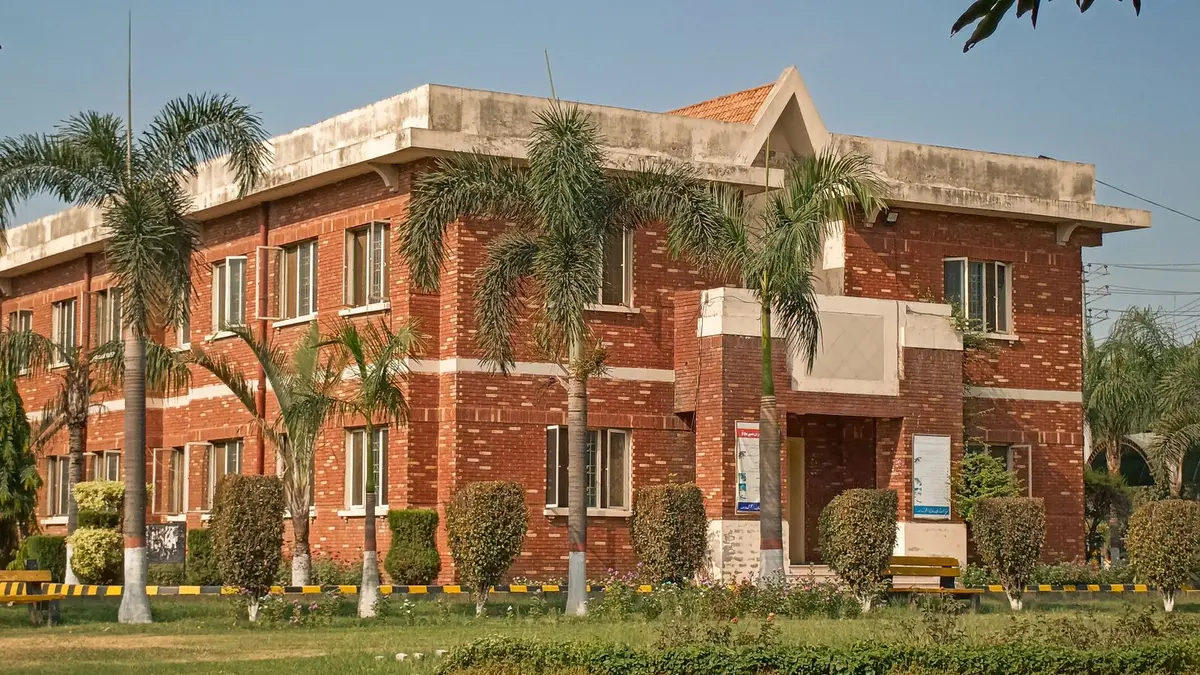
Facilities matter differently by field. A software engineering student needs reliable labs, internet and power backup. A chemistry student needs a working lab. A medical student needs a teaching hospital. A hostel student needs a safe room, clean water and a mess that actually serves food.
Visit the campus if you can. Walk through the department, the library and the labs, and look at whether they are in use or just photographed for the website. If a visit is not possible, ask current students — not the admissions office — what a normal week looks like: how many classes are cancelled, how often the lab is actually open, whether the library has the books the scheme of study lists.
Location is part of this check. Be honest with yourself about distance, daily travel time, safety and whether you can manage the commute for four years. A university that is perfect on paper and two hours away with no hostel is not the right choice.
9. Ask where graduates actually end up
A university’s overall reputation tells you little about one specific department. Where possible, find out where recent graduates of your exact programme went: further study, a relevant job, a professional training, or something unrelated to the degree.
Ask the department for its graduate outcomes, and ask current students the same question separately. If nobody can name a recent graduate doing the work you want to do, that is information, not bad luck. Internship links matter here too: a department with real ties to employers, hospitals, software houses or firms gives you a first job lead that a classroom alone cannot.
For regulated fields, check the professional outcome as well: what proportion of graduates pass the licensing exam or register with the council? A medical college whose graduates struggle with licensing, or an engineering department whose graduates cannot register with PEC, is telling you something the brochure will not.
10. Visit, talk to students, and read the admission notice itself
The last check is the simplest and the most skipped: go to the campus, talk to two or three current students of your programme, and read the university’s own admission notice — not a summary on a blog or a social media post.
Students will tell you what the brochure will not: which teachers actually teach, how strict the attendance policy is, whether fees rise without notice, and whether the hostel is livable. The admission notice tells you the dates, the fee, the documents and the eligibility rules in the university’s own words — and admission notices change every year, so last year’s dates are never safe to rely on. Our deadlines hub tracks the current closing dates for the admissions and scholarships we cover, and it is updated whenever a date changes.
Public vs private: what actually differs
The public-versus-private label matters less than most families think. What matters is the combination of recognition, accreditation, cost and outcomes for your specific programme.
Public universities usually charge lower tuition, but seats are fewer and merit cutoffs are higher, so the real question is whether your marks get you in. Private universities usually charge more, but they may offer smaller classes, better-maintained facilities, and more flexible admissions — and they may also offer merit scholarships that bring the effective fee close to a public university’s. Compare the total cost after scholarships, not the headline fee.
One difference is real: public universities are directly funded and regulated, while a private university’s quality depends entirely on its own management. That is why the recognition and accreditation checks matter even more for private institutions — a public university is almost always HEC-recognised, but a private institute must be checked every time.
Mistakes students keep making
- Choosing by ranking lists alone. Rankings measure research output and reputation, not whether your programme is accredited or whether you can afford it.
- Trusting an advertisement or an agent. Verify recognition and accreditation yourself, on HEC’s and the council’s own websites.
- Ignoring the campus. The university is recognised; the campus you will study at may not be.
- Ignoring the batch. PEC accreditation is batch-by-batch. Your intake year must be inside the accredited years.
- Comparing only the first-semester fee. Multiply by eight semesters, add hostel and transport, then decide.
- Applying only to dream choices. Keep one safe option on the list, or a missed cutoff costs a year.
- Skipping the visit. A campus that looks good in photos can be a different place in person.
- Paying before verifying. No fee, challan or registration payment should go out before the HEC and accreditation checks are done.
A simple final test
Before you submit any application, you should be able to answer yes to all of these for one specific programme at one specific campus:
- The institution is on HEC’s recognised list, under its exact name.
- The campus where I will study is on HEC’s recognised-campuses list.
- The programme is accredited by the right council for my intake year (if my field has one).
- My marks realistically meet last year’s merit for this programme.
- My family can afford the full four-year cost, including hostel and transport.
- I have read the scheme of study and it covers what I want to learn.
- I am comfortable living and studying in that city for four years.
If any answer is no, that option goes off the list — or goes on it only after the problem is fixed in writing.
Frequently asked questions
How do I check if a university is recognised by HEC?
Open HEC’s recognised universities list at hec.gov.pk/english/universities/pages/recognised.aspx and search for the exact institution name. Also check the recognised-campuses list for the campus where you will study. Only degrees from listed institutions are recognised and attested by HEC.
Is a private university degree valid in Pakistan?
Yes, if the university is on HEC’s recognised list and the programme is accredited by the relevant council. A private university degree from a recognised institution is attested by HEC exactly like a public university degree. The label “private” is not the problem — lack of recognition is.
What is the difference between HEC recognition and PEC accreditation?
HEC recognition says the institution can award degrees. PEC accreditation says a specific engineering programme meets the professional standard, batch by batch. You need both for an engineering degree: HEC recognition for the degree to be attested, and PEC accreditation for the graduate to register as an engineer.
How much does a BS degree cost in Pakistan?
It varies too widely to give one figure: public universities charge far less than private ones, and fees differ by programme, campus and city. Work out the total yourself — per-semester fee multiplied by the number of semesters, plus hostel, transport and exam charges — and ask the university whether the fee is fixed for the whole degree or rises each year.
Which is better for BS Computer Science, a public or a private university?
Neither label decides it. Compare the NCEAC accreditation of the CS programme, the scheme of study, lab and internship access, total cost, and where recent graduates work. A private university with a strong, accredited CS department and real industry links can beat a public university with an outdated curriculum, and the reverse is just as common.
Do I need to check accreditation for a BBA or an arts degree?
Business programmes are accredited by NBEAC, and checking it is worthwhile. For arts, social sciences and other non-regulated fields there is no professional council, so HEC recognition of the institution, the curriculum and graduate outcomes carry the weight instead.
Can I change university after the first year?
Migration between universities is possible in some cases, but it depends on both universities’ rules, seat availability and whether your completed courses match the new university’s scheme of study. It is never guaranteed, so choose as if you will stay for the full degree.
When should I start applying to universities in Pakistan?
Most universities open admissions twice a year, for fall and spring intakes, and each one publishes its own notice with its own dates. Start checking the admission notices of your shortlisted universities at least two months before the intake you want, and keep an eye on our deadlines hub for the closing dates of the admissions and scholarships we track.
Sources and official links
- Higher Education Commission — recognised universities list
- Higher Education Commission — recognised campuses list
- Higher Education Commission — degree attestation (e-services portal)
- Pakistan Engineering Council — accredited programmes, Level-I
- Pakistan Engineering Council — accredited programmes, Level-II
- Pakistan Medical Commission — recognised colleges
- HEC need-based scholarship guide (Learnzora)
- BS admission guide for public universities (Learnzora)
- HEC degree attestation guide (Learnzora)
- UHS MBBS admission and merit lists (Learnzora)
- COMSATS admission guide (Learnzora)
- LUMS undergraduate admission guide (Learnzora)
- Upcoming deadlines in Pakistan (Learnzora hub)
Verification note
Facts checked on 21 November 2026 against the official sources listed above. The Global Institute Lahore NOC-suspended flag comes from HEC’s own recognised-universities list; HEC’s recognised-campuses list is cited without a total because the count differs between HEC’s own pages and changes over time — always check the current list. PEC’s accredited-programme counts (509 total: 73 Level-I at 37 institutions, 436 Level-II at 147 institutions) and the SRO 1809(I)/2025 date (17 September 2025) come from PEC’s accredited-programmes pages. HEC’s degree attestation fee (Rs 3,000 per document) and the fully online, paperless process come from HEC’s Degree Attestation page. No fee figures for any individual university are stated in this article, because fees differ by programme and change every year — always confirm the current fee structure from the university’s own admission notice. No deadline is stated for any admission, because each university publishes its own dates; the deadlines hub linked above carries the current dates for the admissions and scholarships we track.